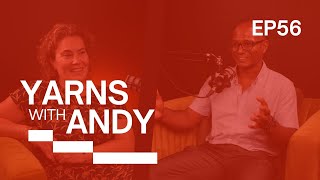
Joanne Johnson
About This Episode
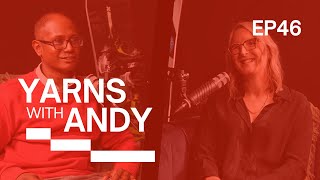
Joanne Johnson came to construction through the law and finance side and has ended up on all three: a legal executive who searched paper land titles out of filing cabinets in 1980s Auckland, a loans manager through the GFC, the manager of a property financier's lending book, and then KiwiBuild's Underwrite Manager and a project director at Kāinga Ora. This episode is the clearest explanation in the back catalogue of what KiwiBuild actually was, an underwrite, not a house-building programme, and her verdict on why it failed is blunt: "KiwiBuild died because of politics." The second thread is Mahi Rise, the mentoring venture she funds and drives herself, which puts young women from Tāmaki College through excavator and forklift operator courses that carry NCEA credits, plus site visits. The third is technology: she is a late and enthusiastic adopter, "adapt, adopt, or be archived", and the episode turns into a live tutorial when Andy walks her through Model Context Protocol and describes connecting Claude to a 3D model to generate a temporary works layout. Along the way she names development contributions as her single biggest cost lever, having watched them go from about $19,000 to $119,000 a house at Tāmaki.
Key Topics Discussed
- What KiwiBuild actually was. An underwrite, a financial instrument where government promises to buy at a discount if the developer cannot sell. It exists to break the pre-sales deadlock: banks want roughly 1.5× cover in pre-sales, pre-sales in a flat market take a year or more, so the development never starts, supply stays low and unaffordability climbs. In exchange the developer had to deliver a proportion of genuinely affordable homes, capped at $650,000 for a three-bedroom and $600,000 for a two-bedroom, in the right typology near amenity, transport and jobs. Target: 3,000 houses.
- Why it died. "Politics killed it." A project could be commercially sound, good developer, good team, resource consent in hand, cash flow stacking up, and still be read at ministerial level through a political lens of risk and re-election. Bad PR under Phil Twyford and the incoming government meant it had to go. Her image: "when you sow a seed into a field that is dry and full of stones and you don't water it, it's not going to grow."
- It still exists. Rebranded as the affordable programme, "like a clean-skin wine", with contracts still cycling through, and now underwriting private-market projects as well.
- The GFC counterfactual. With her banking hat on: had an underwrite existed through the GFC, "there just would not have been as much blood on the floor", fewer depositors wiped out, and that loss carries intergenerational impact.
- Government versus private sector. "It's like salt water and fresh water." Coming from corporate into government meant learning that a commercially complete paper still meets a political filter on Thursday night.
- Mahi Rise. Her passion project, about a year old, born from watching Kāinga Ora's social-outcomes procurement obligations work at Northcote: a solo mother given work experience holding a lollipop sign ended up managing machinery movements across sites. Joanne grew up in a solo-parent home and the security that story represented landed hard. Mahi Rise now runs two Tāmaki College students (16 and 19, in their second year of the Tāmaki Trades Academy) through Matt Griffin's excavator operator academy near Hampton Downs and Fred Bond's Pass Right forklift course, both carrying NCEA credits and, in the forklift case, a three-year competency licence, plus three site visits with Signature Construction in Tāmaki, where they met a female Māori electrician and project managers. She books it, pays for it, drives them from school, buys the food and lends her own steel caps. Her recruitment route ran through the Tāmaki skills hub, which wanted guaranteed work she could not offer, to Tāmaki College, which embraced it.
- The deliberate design choice: make it tangible. "The focus was to give something tangible", not encouragement but credits, licences and a CV line. One student's reaction to her forklift licence: "Wow, I can go and get a job."
- Development contributions as the cost lever. At Tāmaki Regeneration DCs rose from roughly $19,000 to $119,000 per house. On a project for Housing New Zealand at McLennan, Takanini, the team rushed to lodge resource consent the day before an increase. She is immediately self-critical, cutting DCs starves councils that are already not delivering infrastructure, and points to an alternative: the developer finances the infrastructure and homeowners repay it through an additional targeted rate on top of land rates. She thinks councils should be doing this, and that global capital would fund New Zealand growth rather than levying homeowners indefinitely.
- Infrastructure that is going backwards. Houses being consented without wastewater connection, with waste trucked away, "seriously backwards."
- The Auckland Plan 2050 gap. Published 2016 projecting some 720,000 houses; the 2025 progress update shows roughly 8,500 a year, and 34,000 between 2019 and 2022.
- Competition and materials. Too few large parties control materials; BRANZ is a wall to new products; the move to auto-accept products already approved in Australia, "we just copied Australia's playbook", has taken far too long. Modular has repeatedly failed to take: KiwiBuild pushed it, Kāinga Ora's offsite manufacturing shut, a modular apartment block at Northcote had issues, and a friend who sold G.J. Gardner franchises to set up a modular business was slammed by post-Covid shipping costs.
- "Adapt, adopt, or be archived." Her framing for AI, which she compares to the shift from typewriters to the internet. She built the Mahi Rise site in Squarespace over months, then a New Zealand Property Pro landing page in Claude in about an hour and a Women and Property page in Vercel. "You do not need to know any code."
- A live MCP tutorial. Andy explains context windows (roughly a million tokens, and everything before is gone, "same as how you don't remember that RFI"), retrieval, and then Model Context Protocol as the fix for copying between tools. His worked example: Blender with the Bonsai IFC add-on connected to Claude, a 3D model loaded, and Claude instructed to act as a New Zealand temporary works engineer, reading the site topography from the model's coordinates and producing temporary fencing to the boundary, a scaffolding plan and a material movement plan. He is careful about the limits: "that's probably not a full temporary works design," an engineer would do better, but it collapsed the time.
- Human in the loop. Her position, and Andy's: AI handles the gargantuan processing, "but we still have to be the experts because AI gets things wrong." Her prediction: "every services business in the construction sector, their roles are going to be completely redefined. What they're doing today is not what they're going to be doing by the end of the year."
- The change-instrument chain, laid out. Andy walks the full paper trail on air: RFI → consultant → CAN → engineer of the contract → CI → main contractor assesses whether it is time, cost or both → NOD → back to the engineer, who parks it → the client hears only that the contractor wants more money → time passes, nothing is resolved → the contractor issues an EOT, and "some poor sod has to sit down and figure out what RFI was raised to which consultant, what they did with it, what change was issued, and how that impacts time and cost."
- A counter-example that worked. Andy's water treatment plant project, uplifting Auckland's supply by 50 million litres a day during Covid against drought risk, with Fletcher and Beca for Watercare, was designed, consented, procured, built and commissioned in twelve months, marginally over budget, without AI. "If there's a real problem, people come together and figure out a way to solve it." Against it: CRL at roughly ten years, a budget from about $1bn to $5.5bn, businesses shut, and a Queen Street both of them describe as hollowed out by the perfect storm of CRL works, Commercial Bay, the waterfront and Covid.
- Advice to young women entering construction. Attitude and work ethic. Gareth Ready, Signature's CEO, told her students on site that he had not done well at school, it is about showing up, starting at the bottom and earning trust. Andy: "a skill is teachable… but if you're not willing to learn, nobody can teach you."
- Motorsport. Thirty years racing, thirteenth season in the BMW race driver series, her own car, four awards and third in series across the last two years. Classic-car obsessive, a 1973 Alfa Romeo GTV 105 driven to the Nürburgring, then Le Mans Classic. Her BMW club network is how Mahi Rise found both its training partners.
Notable Quotes
- "Adapt, adopt, or be archived.", Joanne Johnson, on AI
- "KiwiBuild died because of politics.", Joanne Johnson
- "When you sow a seed into a field that is dry and full of stones and you don't water it, it's not going to grow.", Joanne Johnson
- "It's like salt water and fresh water.", on moving from private sector into government
- "Construction is a very people-oriented business.", Joanne Johnson
- "Time is more important than money. You can take away all the money I've got, I can make more money. I can't buy more time.", Andy Alagappan
Guest Background
Joanne Johnson is an Auckland native who left school at the end of sixth form having decided university was not for her, and fell into the legal sector as a junior at Simpson Grierson. She became a search clerk at Glaister Ennor, walking up to the Land Titles Office on Wellesley Street with a $5 coupon to have a paper title pulled from a filing cabinet and photocopied, the analogue baseline against which she reads every subsequent technology shift. She qualified as a legal executive across conveyancing, estates, commercial law, trusts and wills. From there: Elders Finance as a loans manager, into the entity that became Hanover, which fell over in the GFC; then running a property financier's lending company end to end, "CEO, CFO and the tea lady"; then five years with developer Nigel McKenna sorting contracts and learning development from the inside. She joined KiwiBuild in 2016, closed more deals than anyone on the team and became its Underwrite Manager, then moved to Kāinga Ora as project director on Northcote, and to Tāmaki Regeneration. She now runs Mahi Rise alongside her own property ventures. She has a husband, three cats and three cars, describes herself as a lifelong tomboy who loved Lego and hated dolls, and has raced for thirty years.